
Our Veterans, Our Stories Podcast
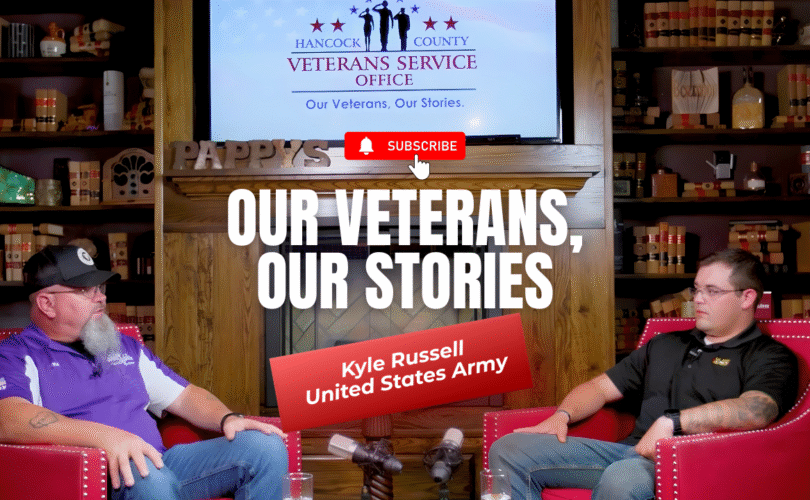
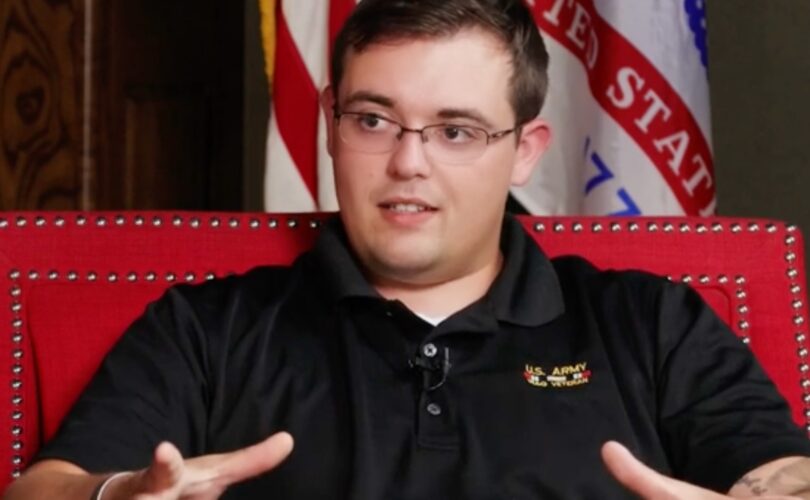
Kyle Russell United States Army Veteran
You never really know what military service feels like until you live it. In this episode of Our Veterans, Our Stories, we sit down with Kyle Russell, a United States Army veteran who served as an infantryman and deployed to Iraq in 2018 as part of Operation Inherent Resolve.
Kyle shares what led him to enlist at just 17 years old, his experience earning an Airborne Ranger contract, and what it was like transitioning from training into real-world combat environments
Apple: https://podcasts.apple.com/us/podcast/our-veterans-our-stories/id1798555195

0:00:01
(Speaker 1)
Welcome to the Our Veterans, Our Stories podcast with the Hancock County Veterans Service Office. This is where we give our local veterans an opportunity to share their stories with our community and beyond. There is a real brotherhood among all vets, and it will be great to help others to know their stories about serving our country. And it gives us an opportunity to introduce the community to our team at the Hancock County Veterans Service Office so people can learn a little bit more about what we do and how we can help. Thank you for joining us today. We’re here with the exciting Kyle Russell.
0:00:34
(Speaker 1)
I, as well as you, am excited to hear about his life and his time in the service and anything else you’d like to share. So with that, Kyle, welcome to the podcast. Thank you. Thank you for being here. And I guess let’s just get into it. Tell me a little bit about how you grew up, where you grew up.
0:00:53
(Speaker 1)
I was born here in Finley. I grew up in Arlington. My whole family has kind of lived around Arlington their whole lives. I never really went to any school. I stayed with my mom in Finley for a little while. My dad lived out in the forest, so Arlington was always a mutual ground.
0:01:14
(Speaker 1)
So between going back and forth to our houses, I played soccer for Arlington, football, sports there. My brother went to school there. Nice. Yeah, so come towards the end of your high school career, obviously you joined the military. Talk me through a little bit about that, kind of what made you want to join the military. My great -grandpa was in the Army Air Corps.
0:01:39
(Speaker 1)
I had no idea what it was. I used to see these pictures, these old Polaroid pictures of him in Japan. And nobody in my family other than my uncle was in the service. And I’ve never not wanted to. I’ve always just been very patriotic and wanted to do something about myself. And I went to the recruiter’s office.
0:02:03
(Speaker 1)
I got close with kind of all the recruiters, kind of feeling out how it was going to be. My parents were mostly on board, very supportive of it. When I was 17, I was so eager to do it, actually. When I was 17, I joined the late entry thing because I was already super eager to do it. So I chose the Army. They had a lot more things to offer, I think.
0:02:27
(Speaker 1)
I chose my exact job instead of just the branch of my job. So what did you choose? What MOS did you choose? So I chose 11 X -ray. And then when I went to the military entrance processing station, I signed my contract there with an Option 40, so I had an Airborne Ranger contract. And it was almost a five -year contract.
0:02:51
(Speaker 1)
And then shipped off as that. And then it’s not until you get to the reception battalion there that they choose whether you’re going to be 11 Bravo or 11 Charlie. So one’s an Infantryman and one’s a Mortarman. Mortar Infantryman. When I got there they lined us all up on a wall and said count in threes and we counted in threes and they said you three are 11 or if you’re a three you’re an 11 Charlie the rest of your 11 Bravo’s and I was 11 Charlie. Oh wow.
0:03:19
(Speaker 1)
I thought that that was going to take me away from being an infantryman. I thought that was like, I’m just going to shoot these stupid little bombs all day. And it actually ended up being, I went through the entire 11th Bravo Infantry School. And then we had to stay an extra two weeks and do the mortar school. So that was cool. Love you.
0:03:37
(Speaker 1)
Yeah. And then out there is when they brought us all on the pad and said, here’s where you’re going. They read a big list and said where everyone’s going. My best friends. All my group that I hung out with, my best friends, they went to Fort Lewis, Washington, and I went to Fort Hood, Texas. And you went to Hood?
0:03:54
(Speaker 1)
Yeah, I went to Fort Hood. Hood, Texas. It’s called something else now, but yeah. Yeah, absolutely. So, in your service, you get to your unit there at Fort Hood. Walk me through that transition.
0:04:05
(Speaker 1)
How’d that go for you? It was a little weird at first. I’d never really been too far away from home, and it was a 21 -hour drive, I think, from Texas to home. It was hot. I had to get kind of accustomed to everything down there. I was on, you know, deep south, so a lot of things are like Spanish, English.
0:04:29
(Speaker 1)
Like, I didn’t know any of the gas stations down there. I didn’t know any of the local, like, chains. I was just kind of out of my element. I got to be friends with a lot of good buddies of mine, and we kind of started doing stuff down there. We were about an hour from Austin, so we used to go to Austin a lot. Fort Hood, that’s the big one.
0:04:47
(Speaker 1)
That’s the biggest army base. I was out there before and you go around and all the numbers of course are numbered on the military base. So you get to what, North Fort out there and you see some of the building numbers are like 17 ,860. That gives you an idea. I believe it’s the size of or just under the size of Findlay, probably. I mean, it’s huge.
0:05:08
(Speaker 1)
The field training area out there is remarkably huge. Like, you would get, we’ve had people, they’ve, unfortunately, they found people out there, like soldiers out there when we were on field problems deceased, like, because it’s so vast and so hard for search parties and stuff, you know, there’s, but it was fun. I mean, for what it can be, it was hot. Yeah, it’s hot down there in Texas. So what other places were you stationed? So that was my only actual duty station.
0:05:37
(Speaker 1)
In 2017 we had trained up for the National Training Center in California. We went in February of 2018 to Fort Irwin, California and spent a month in Fort Irwin. doing the sandbox, like where your squadron gets qualified to deploy. You have to get qualified by them to deploy. And then on my birthday, on May 4th in 2018, I deployed to Iraq. On your birthday?
0:06:03
(Speaker 1)
On my birthday. Wow. I actually deployed to Kuwait first, so we were in Kuwait. That was like an intermittent two -week, like, logistic nightmare that we were just sitting, soaking in the heat, getting used to it. And then two weeks from that day on the 16th, May 16th, I believe, they set everyone up and we went to the C -130s and we touched down in Al -Qaida, West Iraq. I got you.
0:06:29
(Speaker 1)
At night, 11 o ‘clock at night. Yeah. So going back to the NTC rotation you had there at Fort Irwin, I hear you were you were pretty successful there. Can you tell us a little bit about that? Yeah, so I won this thing, my squad won this thing called Hero of the Battle, and it was your Out of the entire regiment, all the squadrons in the regiment, it was the most lethal crew. So a truck crew consists of your truck commander.
0:06:54
(Speaker 1)
I was a corporal at the time, so I was the truck commander. I was the youngest truck commander in that squadron. I wasn’t even 21 yet. Wow. And one of my buddies was a gunner, a weight assistant gunner, and a driver, and then we had an ammo bearer. And that was what your crew consisted of.
0:07:11
(Speaker 1)
hundreds and hundreds of crews and strikers and that was our vehicles we had at the time with strikers. And so we were the most lethal squadron in the… That’s a big accolade to get, man. That’s cool. That’s serious. I got a coin from the Major General at the time for the Deputy Commandant of Fort Hood.
0:07:32
(Speaker 1)
Wow. In III Corps. And so Got all the pizzazz for a little bit, and that was about it. It didn’t mean much after that, but when we deployed, we didn’t even deploy with the Strikers, so we deployed with the MRAPs and the MATVs. So we kind of trained up on the trucks that we didn’t use in country. And also we shot mortars a lot of times in garrison in the United States and then overseas rarely.
0:07:57
(Speaker 1)
It was all foot. It was all what you’d normally think of, I guess. I see. So you’re in Iraq now. And what are some types of missions that you pulled there during your time? Yeah, so one of the first things I did, Originally, when I had first got to Fort Hood, before they kind of revamped, because I was in a cavalry unit.
0:08:20
(Speaker 1)
There’s not a lot of infantrymen in a cavalry unit. So they were kind of pushing me on the surveillance, like the long range type of surveillance with them. And so I kind of got that part of it, which was good. I got two things coming into one. And so when we got to, it was a good shot. Um, and I was a marksman guy.
0:08:42
(Speaker 1)
Um, so my, one of my first things we got did there was called a guardian angel mission. So, um, Colonel Byram at the time, um, he would go out into the cities and talk with local, um, sheiks or whatever, local leaders, um, and have the tea and the goodies and all that stuff. And I, we would go out, I would go out with three or four guys and we would go out and guard him a while. So I’d have all the locals coming up and all the people. around and kind of weary, kind of sketchy most of the time. They sometimes refer to those as what, PSD emissions?
0:09:15
(Speaker 1)
Personal security details? Yep, high value. Everyone knew he was the colonel of the United States Army. Yeah, you have to have all your ducks in a row when you’re in that line of work right there. Yeah, they usually didn’t want somebody not on their game with it, so we pulled surveillance and security team for them. We did a lot of quick reaction force when we needed called out.
0:09:38
(Speaker 1)
to anything really, there was that. Everyone always had to pull their side of tower duty and everyone’s got to do that. They had their time with that. I was usually starting to become more for the people who just call them fobbits, but just dudes who just wanted to stay. Just hanging out, doing their time. But yeah, so Any missions stand out on your QRF missions?
0:10:05
(Speaker 1)
Yeah, probably one in particular was we were sitting, we were watching a movie. I don’t remember what movie we were watching. We were watching it all in our like, we had our vest and our t -shirt and little ranger panties on, like little shorts and our flip -flops and watching TV. And then we got a call on the phone, so they had a like the red phone, but it was a black phone. But It rang and it never, it rang very rarely. Usually when we knew ahead of time something was going on that we were prepared for.
0:10:37
(Speaker 1)
And they, that was the spin -up phone, and they called us and they said a 160th sword helicopter was shot out of the sky, which is a Special Operations Aviation Regiment helicopter. And I think it was the 3rd Special Forces Group. was out there, and they were down outside of Tal Afar. That was a long way from where you were. Yeah, so the United States had actually never went into that zone that we had a big map, and they had never went into that zone. It was a very, very, almost a day -long convoy.
0:11:09
(Speaker 1)
It was a long time. But we started to get our stuff around, and they had the Ranger Regiment guys come, and we all spun up our VICs and loaded up. a bunch of ammo and they gave us a little speech beforehand and said you’re going to take contact, this is going to happen, everyone be on your game and everyone was like we’re all speechless. young dudes getting super hyped up and it was a long, long, long drive out there and we ended up getting there and secured a perimeter around the helicopter. They actually had to blow some of the helicopter. They had The really cool part of it was they had two guys in a black vest, no jeans on, no nothing on their shirts, no nothing.
0:12:02
(Speaker 1)
And they come in and got something out of the helicopter and they dipped out just as quick as they got there. So everyone was like, what was that? I still have no idea what it was, but we burned a lot of the stuff from the helicopter out. And then when we were doing that, they called across the radio and said, all the gunners get on top. And there was a vehicle -borne IED coming at us. And it was like a movie scene.
0:12:28
(Speaker 1)
Everyone’s up there doing it. And there was a hill. I even have a picture of it. There’s a hill. kind of cresting over the thing and we knew where it was coming from because the Rangers have the cool stuff and they have this little gadget on their vest and they can see on the satellite exactly where it’s at. So we fixated it and you can see two Apaches come up over the thing and just annihilate this thing.
0:12:49
(Speaker 1)
It was the coolest thing in the world. And then the Special Forces guys, we picked them up and they hitched a ride back with us to Kira and we did that. We did a lot of logistics missions too. convoys to transport stuff from Mosul, the Al -Nur Mosque. When the Iraqi army was taking that over, they fought. And they had a fight there in the old city in Mosul.
0:13:17
(Speaker 1)
It’s called Old City. Going through there, very, very sketchy. They had the ISIS. That was around the Syria missile time, all that stuff going on. Everything was very on edge. We had our fair share of instances.
0:13:30
(Speaker 1)
That was a tough time right there. Yeah, it was also kind of tough. Some people, especially in like 2018, a lot of people didn’t think things were happening, which I get it. It’s not OIF. It wasn’t the invasion, but it’s kind of, I don’t know how to call it. It was weird when people would be like oh you’re just you know you guys are just there for support or whatever and we weren’t there for the support we were we all saw our fair share of stuff going on had our own stuff going on and absolutely yeah yeah so man some of these names you’re saying are bringing back some memories I was at Q West for a while and we’d go up through Mosul up to Tal Afar and you know over the mountain range there and all that and some of these names you’re saying are kind of just bring me back a little bit so that that’s pretty cool that’s uh That’s a different kind of area up there.
0:14:20
(Speaker 1)
Yeah, so, okay, so you come back from your deployment to Iraq, then what happens next? You deployed somewhere else, didn’t you? No, we kind of went to Syria. It was all in the same operation. It was Operation Inherent Resolve. But yeah, it was that.
0:14:42
(Speaker 1)
We just did the plane transport there in Germany, Ireland, that was just a couple of those, just, so that wasn’t really a deployment there. But, so we actually came back to Kuwait at the end of our deployment, the 10th Mountain Division replaced us. And so we did that transfer with them in Triple Canopy, which used to be Blackwater. And so went to Kuwait for a few weeks, came home, you know, partied hard for a little bit. And then, We started Red Cycle, which is like where you kind of get put on the, you got your units all the way up here and pressure and stress and this all happened, they put you on a red cycle. which is now you’re doing like, not dumb stuff, but small stuff around base.
0:15:30
(Speaker 1)
You’re doing gate duty on the base and something that’s not as vamped up as… Kind of a decompression period. Yeah, decompression period. I went home on leave. I think I did three, I took three weeks. I came home.
0:15:42
(Speaker 1)
It was a little weird being home. I don’t know, all the things. It’s just a weird, it’s really hard to describe until you do it. But it was good. We came back and we started Red Cycle. After Red Cycle, we started amping back up for deployment again.
0:15:58
(Speaker 1)
We were very, very fast. The third coverage was a very, very fast deploying unit. I think they deployed again. I got out in October of 2020 and I think they deployed again in January of 21. That’s quick. I would say some of the most memorable moments I got from the point was definitely the first second that we stepped foot in country.
0:16:26
(Speaker 1)
I remember getting off the C -130, and there was a dull red light in the back of the C -130, and dark, and shaking. And we got out, and I remember looking up at the stars and being like, oh my god, I’m in Iraq. And as a kid, you just think of Iraq as this place that you only have an image of on TV and movies. And I just remember the smell. I’d never been in a war zone before. I had no idea what it smelled like.
0:16:49
(Speaker 1)
I just know that that smell, it smelled like a war zone. It was a little scary. Like, honestly, we were taking our bags and unloading in our tent at midnight. I think we landed at 1130 at night. And so and then we kind of got up and started our day after that. What time of year did you fly in?
0:17:09
(Speaker 1)
May. So it was already hot. Yep. Already hot. Already over 100. Already hot.
0:17:13
(Speaker 1)
Yep. Absolutely. I have a picture of me at 131 degrees. Yeah, absolutely. The water was scalding hot. The one that kept the tent up.
0:17:20
(Speaker 1)
the pallets, and I remember on the way to when the SOAR helicopter crashed, I remember within the first 30 minutes of that mission, we were in this long convoy, and I remember all the gunners sitting up there, and the ranger commander was in charge of the convoy, and he had called out to the left. There was a guy sitting there, which we already knew to expect contact. expecting it, and then it being there is different. And I remember the guy, this low guy on a ridge aimed down right at us as we were turning left corner. And he held an RPG against his shoulder and aimed right at the back right tire of our medevac vehicle. And I don’t know what, I’m gonna guess he got a good sense of this is a terrible idea for me because he pulled up and did not do that.
0:18:12
(Speaker 1)
So that would have been bad. So that was only the first 30 minutes. And like I said, when we went to Missoula, there were some places there that were very sketchy. There was the inner city, the old city part there. Ruins, it looks exactly how you would picture it would look. I can’t describe it.
0:18:35
(Speaker 1)
ISIS flags all over the place. There’s black spray paint and red spray paint and noodle -looking Letters and symbols everywhere that I have no idea what they mean. We did know the cross the Isis cross and So a lot of the buildings there were kind of tagged with that People looking out right outside the we’re going slow because they’re through the city. We have these Massive vehicles and these little cars behind us cars had to stay a certain back far away from us Remember we crossed this bridge at night and this bridge was just the width of our vehicles and it was very very nerve -wracking. One vehicle one at a time and that was very very dangerous.
0:19:22
(Speaker 1)
There’s dudes outside watching and Is that across the Tigris? Yep. That’s Oman’s Crossing. Oman’s Crossing. The floating bridge. Yep, floating bridge.
0:19:31
(Speaker 1)
That’s what it was. One vehicle. Yep. It was very sketchy. And then we had got into, we called it the NOC. I don’t even remember what the NOC stood for.
0:19:41
(Speaker 1)
That was the United States’ tiny, tiny little like cop right there. And that was our safe zone. But once we entered that, we were like, oh, thank God. Because that All the things in that drive and the things that went on and the things that we… took there were rough. So we all just wanted to get it over with. And then we knew we had to go back.
0:20:06
(Speaker 1)
So there’s always that part. Yeah. Going back wasn’t that bad. But yeah, we got to the knock. We did the stuff there. I actually got to go through Saddam Hussein’s sister’s palace.
0:20:17
(Speaker 1)
And we went up to the palace. Palace doesn’t look like a palace anymore. It was very broken. They had dropped a JDM through the dead center of that palace. And I have a little piece of marble from it, actually, in my house. And so we got to sit on the little chair, like the cool chair, and go through there.
0:20:39
(Speaker 1)
We had sniper nests on top or whatever. That was some of the long -range surveillance teams or whatever. Ours was in Kera. So we were just kind of looking at theirs, which was funny because half of our unit got divided. So the guys I trained with, some of them were at the NOC the whole time. Some of us were in Kera.
0:20:55
(Speaker 1)
Some of us were in Ramadi. And so we were all kind of, we were all talking on our phones, like, what’s going on, man? Your sat phones? Yeah. So we had this little thing called a puck, and we could load data onto it. It was very expensive.
0:21:10
(Speaker 1)
but we could, so we would, so you couldn’t make phone calls or text or anything, but you could use like Facebook Messenger. And so we would, if we would turn our puck on and we needed something, we would call them on or text people on Facebook. So I talked to my family. The USO also had the phones and stuff there. So it was good. That was a benefit of going in 2018 was I could FaceTime my family every so often.
0:21:34
(Speaker 1)
I remember Thanksgiving, I faced them on Thanksgiving, and it was always nighttime when it was their daytime. And it was a rough day, we had a lot of indirect fire. It was bad, like you could hear in the background, my great -grandma was like, I could tell her she was getting upset inside, told her I had to go. But yeah, I remember that. So, injuries is good. On your travels up from the south to the north, up the Tal Afar area, I mean, I know you went through some dangerous areas, probably went right through Baghdad.
0:22:06
(Speaker 1)
Yeah, so when, actually in October that year on deployment, I started not feeling too good and my stomach started hurting, so I had already had a TBI, a traumatic brain injury, and gotten a little hurt in my shoulder pretty bad. And it was funny, I ended up passing a kidney stone, and I went to the rural one there and with the doctor, and I had, like I said, other stuff going on. And I had stuff in my head going on, like I said, the TBI. And I had blood coming out of my ears. And so it was a whole mix of things. It wasn’t just kiddie stones.
0:22:50
(Speaker 1)
It was a whole mix of things. I just got really ill, like just was falling down. Like my health was declining, and something was wrong. So I remember passing out at the roll one. And they called a black hawk, and I got medevaced to Baghdad.
0:23:06
(Speaker 1)
I have a picture of me with a blood pressure cuff going like this next to the door gunner of a medevac chopper, and I was in the Baghdad hospital there alone in the ICU for four days, and they had another guy come in. It was a ranger. He didn’t have a leg. He had an IED and I sat next to him in bed and we were talking for days and Sergeant Major Grinston was the force comm sergeant major at the time and he came in and talked to us both and coined us and talked to us in the ICU in Baghdad. And then he ended up becoming the sergeant major of the army. I remember when I was leaving, I had to catch a flight, so after I had already healed up and they found out what was going on and I got kind of taken care of, it was about a week, and I stayed in a tent, in a transit tent, and my tent mates were way cooler than me, because my tent mates, there was a guy from SEAL Team 3, there was the MARSOC, So there was Marine Raiders there.
0:24:12
(Speaker 1)
There was other snipers there that were there with me. I remember, and the other tents out there were just normal Joes. So I’m not sure why I got put in that tent, but I felt very out of my element in that tent. They were super cool guys. I have their phone numbers. So they ended up, they could catch a flight whenever they want. They can kind of do whatever they want.
0:24:33
(Speaker 1)
But I had to wait, I waited on a flight and I got sent back to Kara and carried on until we left in January. But yeah, that was my little medivac. Wow. So you mentioned there was some things that led up to your your medivac. What world did you get tangled up in? So I remember when we got there, my bed was just kind of like
0:24:59
(Speaker 1)
frame, just little rails under my cot. So it wasn’t like an army cot, it was like a kind of a bed that they made like a bunk bed, except we didn’t have bunk mates. I kept my stuff on top and I remember sitting there and just everyone’s kind of sleeping it was early really early in the morning and it’s huge boom and like my the whole tent shape the whole fob shook and everyone’s like getting their stuff on and we’re all going to the bunkers and the incoming incoming incoming thing and I fell right through my bed and right and smack my whole head and everything like fell right through my bed, and I remember getting up dazed, and everyone’s like, one guy next to me was Sergeant Freeman, and he’s like, oh my god, are you okay? I was like, no, I hurt. I think I blew your bed apart. Yeah.
0:25:46
(Speaker 1)
So that was that when I fell out of my bed, and then so, they had IEDs placed along, you know, certain places or whatever, and it hurts when they go off. So anyways, it led to my, the TBI and the blood from the ear was a weird thing. I guess that was uncommon for that. And that was the – You mentioned your shoulder. The TBI. Was that, that was – Yeah, so there was a ricochet.
0:26:22
(Speaker 1)
We had a ricochet at the NPRC there. So we did kind of like training in deployment. So they had like a fake, not a fake range, but like a fake thing there. And one of the rounds hit off the side of the truck and struck me in the shoulder and hit the plate. So it hit that. It wasn’t that bad.
0:26:46
(Speaker 1)
Knocked me on my butt. It didn’t hurt that bad until it had some internal damage that didn’t really set in. until afterwards. I ended up doing physical therapy for quite a while on my shoulder. I get a good stinger in it every once in a while. hand and my forearm from here and my pinkies are numb all the time.
0:27:11
(Speaker 1)
Same with this hand, but it started with this hand. So like this tendon that comes down here, this whole thing’s kind of numb. I saw a surgeon about it afterwards and they didn’t need to do surgery. They’d do more damage tearing it up, tearing into it. So unless it shifted, I have a picture of the x -ray though. You can see the big dent and the, yeah, you can see a big dent in my, in the little whatever joint, the ball joint that is right there.
0:27:33
(Speaker 1)
That’s pretty cool. So what does that feel like? You know, after your training, you go through all this training, and to actually receive contact and have to react, I mean, what, physiologically, I mean, mentally, I mean, it’s a lot. Tell us about that. It actually kicks in pretty easy. Like, you do it for a year.
0:27:54
(Speaker 1)
Like, I got in 2016, and I’ve done it for two years before that, and everyone’s very ready to do it. Everyone acts, most people do, better than they would think in situations like that. And going through Old City, they would do these little pop shots at us. And we were in the trucks. And they would do this little, like, choo -choo -choo, and then leave. And then we wouldn’t do anything for a little bit.
0:28:20
(Speaker 1)
And then we’d take another left, and they’d go choo -choo -choo, and then leave. So it was very hard. There was a lot of civilians in the city. And it was very hard for the rules of engagement, because we they would leave. We couldn’t fire that well in the city at the time. On the outer city, it was a different story.
0:28:37
(Speaker 1)
We fired. But inner city, we had to be very mindful of, we didn’t want an international incident going on. Absolutely. So it was kind of hard. It was very aggravating. You just want to go in and
0:28:50
(Speaker 1)
gotcha, but you can’t. So, yeah. So, um, okay. So now you’re out of the army. Now you’re back here. Where’s that lead you?
0:29:00
(Speaker 1)
Tell me about that transition. Cause I know that’s not an easy one. No, that was hard. That was actually the hardest. One of the hardest part was I felt I was very, I was a Sergeant. I had to combat deployments.
0:29:09
(Speaker 1)
I did all this stuff that I, um, very was felt very important. I was a, you know, contributing person to a big thing and I got home and I was like, I felt like I got knocked off that saddle and I actually was on unemployment for a little bit and I ended up working construction with a buddy of mine. Not great, not a very handy guy, I’m sad to say, not great with my hands. I did that, and then I actually got a job where my dad works. It used to be Hancourt. It’s called ADS now.
0:29:46
(Speaker 1)
I drove a forklift there for a little bit. My wife was still in service, and so she still lived in Texas. She still had some time left on her contract, so I would move back to Ohio to try to get set in a job and a house and all that stuff. It wasn’t working, and I went back to Texas until she got out. So you got married while you were in service? Yep.
0:30:09
(Speaker 1)
As soon as I got back from deployment, I was just kind of dating around. I wasn’t really even dating, trying to date. I just kind of was just, you know, hanging out, doing stuff with friends, going to parties and stuff. And I met my wife and we started dating and then that was it. We got married in August. The rest is history.
0:30:28
(Speaker 1)
That was it. Good. Yeah. So you work in construction. Is that what you do? finally settled into or no.
0:30:38
(Speaker 1)
So when we have moved back to Ohio, I had applied. I always want to be in like like law enforcement or something like that. something correlating to my job in the service and with the camaraderie and something of importance, I felt. And so I got in touch with the sheriff here in Hancock County, and he said there wasn’t any road spots at the time, but there were spots in the jail. So I applied there and I got hired into the jail in 2021. And I work there.
0:31:10
(Speaker 1)
I’ve been there for about three and a half years. I actually left a couple months ago to start the police academy. And I’ve been in that right now. So that’s where I’m at at the moment. That’s fantastic, man. A lot of people say that’s not a job, that’s a calling.
0:31:24
(Speaker 1)
You know what I mean? I bet you’re probably one that feels that way. Yeah. I don’t know what else I would do. And I know you’re involved in our Veterans Response Team for our office, which is, we’re thankful to have you there. Yeah, that was new.
0:31:37
(Speaker 1)
Dan Harmon had asked me to talk to me about it. That was my kind of foot in the door to helping in law enforcement, like helping law enforcement agencies. And especially with working in the jail, I knew a lot of, know a lot of the guys there and trying to help. Maybe if someone is not a veteran in a law enforcement agency that I know and trying to deal with somebody, I can be that. person kind of between both of those ends and be able to kind of mediate and step in the middle and help that person in crisis. And it’s very important stuff right there.
0:32:11
(Speaker 1)
Yeah. What advice would you give to anyone that’s thinking about joining the military in today’s world? In today’s world, I honestly, even with some of the guys that I’ve been around lately, I think the military would do people very good. Some people are, you know, don’t have a certain, which I didn’t either, I don’t have certain senses of pride or self or entitlement. or just anything they have. Purpose, kind of like the purpose?
0:32:43
(Speaker 1)
Yeah, something that the military can give you. Camaraderie was huge. I learned, Chief taught me how to make my bed the right way, get up on time, make sure everything’s set and orderly, and I think that anybody with any aspiration to do that, or even schooling, like helping with schooling. The military helped me. I don’t have my degree yet, but they gave me college credits while I was in, for one, just my job, and then two, I was taking college courses when I got back from the service, or back from deployment. And yeah, so I think that’d be great for anybody. Gotcha.
0:33:21
(Speaker 1)
Obviously, you’ve visited our office. Mm -hmm, I have. Tell us about your stories, maybe how our office has assisted you, and kind of what that means to you. So when I had first got out, I didn’t really know where to start. Everybody in the army was funny transitioning, leaving the service. Everybody’s willing to help you, but nobody can help you because everybody’s still there in the service, because they’ve never gotten out either.
0:33:48
(Speaker 1)
So I was looking around in Texas, trying to figure out how to file my benefits and how to get all this stuff. And I couldn’t figure it out. So when I had moved back here, I made an appointment. with you guys, and I really was just trying to get in. Originally, I just wanted an IID card so I could get my medical stuff. Like I said, I wasn’t looking for anything else.
0:34:10
(Speaker 1)
I just wanted to be able to get taken care of, like mentally, and I wanted my medicine and stuff like that, and physically, my hearing. I don’t have good hearing. I remember I saw Frank, I believe. Yeah, I saw Frank. So Frank set up my whole thing. He filed all my claims.
0:34:33
(Speaker 1)
He did my… I got my medicine that I needed. I got my benefits that I get. I got my compensation. I got the whole shebang, things that I didn’t even know I was entitled to. So that was great.
0:34:48
(Speaker 1)
I had no idea. It was great to have an expert and someone that does that all the time and be able to kind of guide me in that direction. I actually spent, I waited like a year, I think, was like, I can’t not have any help with this. I’m sure that you probably got either a mental memory or maybe even a journal that you may have kept, probably outlining certain days or certain events or things like that. Is there any dates or anything that stand out? If so, what do you use to get through those dates?
0:35:27
(Speaker 1)
Yeah, there’s a couple days. One of them was July 27th. My buddy had shot himself that day. And there’s another, October 8th was another one on deployment. That was really, really rough. I would say Thanksgiving.
0:35:46
(Speaker 1)
It was a good time, but Thanksgiving, like I said, was the worst probably indirect fire type day that we had. And I don’t know. Going through it, it’s like I know other people don’t know, and so I don’t expect them to cater to me, and I don’t expect them to feel sorry for me or anything. I just, I kind of do on my own thing. I do get kind of quiet around those times. What are some of your go -tos that help you, some of your methods of getting through those?
0:36:21
(Speaker 1)
I’ve been running lately. Yeah, I like running. It’s kind of peaceful. I did run on a track, and I hated running. I absolutely hated running. I know I don’t look like I like running.
0:36:31
(Speaker 1)
I like running by the river, and the Emery Adams, and just looking. I like fishing. So I just like water. I don’t know. I like to play games. So I’ll play games or something that day.
0:36:44
(Speaker 1)
I’ll kind of isolate a little bit. Not that I should, but that’s just kind of what I do around those times. I do reach out to my veteran buddies on those days. We all kind of talk. We keep in good touch. So I’m really good friends still with a couple of them.
0:36:59
(Speaker 1)
One of them lives in Tennessee. We actually met up when we went on vacation in Nashville. It was the biggest, longest hug I’ve ever got from a man. That’s cool. And of course you’re involved in some of our resiliency programs at the office too. I am.
0:37:12
(Speaker 1)
I go to the meetings on Mondays. Oh, Veterans Discovering New Life? Yep. That’s been very helpful. seeing other people cope with stuff. It’s kind of hard for me to get into originally.
0:37:24
(Speaker 1)
I had tried when I first got out to go to groups for mental health and PTSD and stuff like that. And I just found myself getting closed in to groups where it was like Vietnam veterans and stuff like that, which, yes, Vietnam veterans, they, a lot more things than I did, okay, but, and I felt, but I felt isolated because of that because a lot of the guys were like, You know, you went to Iraq in 2018. I was in Vietnam. So I was kind of knocked down to here, like my stuff didn’t matter as much. And then I started going to this group here at the Veterans Service Office. And nobody there has ever made me feel like that.
0:38:04
(Speaker 1)
And I think there’s a couple Iraq vets there, or Global War and Terror vets there. Maybe feel like I’m not being downplayed and people do know what I’m going through at sometimes. And so that’s that’s good. I appreciate that program. So around those dates, I know you’re familiar. Like always.
0:38:25
(Speaker 1)
Day, when people tell us, hey, thank you for your service. And it’s not really about us that day. What are some things that may happen on those dates that are important to you that people have tried to reach out to you, but kind of did it in the wrong way? And then maybe what are some ways that people, some things that people have done for you that really hit the spot and really were what you were looking for? I would say Some bad things that I’ve had people say is more like, that was a long time ago, or you’ve been out of the military for this long. How can it be?
0:39:01
(Speaker 1)
It’s got to be better. Or they just do the whole, and I’ll be like, hey, I feel open enough to tell them, hey, this is how I feel. And they’ll just be like, oh, you should go talk to somebody. I’m trying. I’m trying to talk to you. And so I just kind of ball it up.
0:39:18
(Speaker 1)
Ball it up is a very common, I think, way that vets deal with it. It’s just bad. The whole 22 -a -day thing is very correlating to that. But I do have friends who do know and know how it is. It’s a lot easier to talk to other vets about it. And my friends that were in the service with me about it on those days.
0:39:37
(Speaker 1)
Honestly, some people think that not asking about it is what vets want. And it could be for some people. appreciate talking and getting it out instead of just always thinking it in myself. And I like telling what’s going on and how I’m feeling about it. And people, even if they don’t say anything, but are listening and bouncing questions back off of me so I know that they’re listening instead of just letting me do it. That helps.
0:40:08
(Speaker 1)
I don’t know why it’s a very small thing, but When anybody is like talking to you and someone’s bouncing a question back off of what you’re saying, it makes you feel good because they’re listening and they’re understanding what you’re saying instead of just… in one ear and out the other. Absolutely. I think that’s good. Well Kyle, thank you for sharing your story with all of us today. You’re an amazing veteran and I thank you for your service.
0:40:31
(Speaker 1)
Thanks sir. Thank you for what you continue to do today and it’s been nice talking with you. Thank you. You too. Thank you.