
Our Veterans, Our Stories Podcast
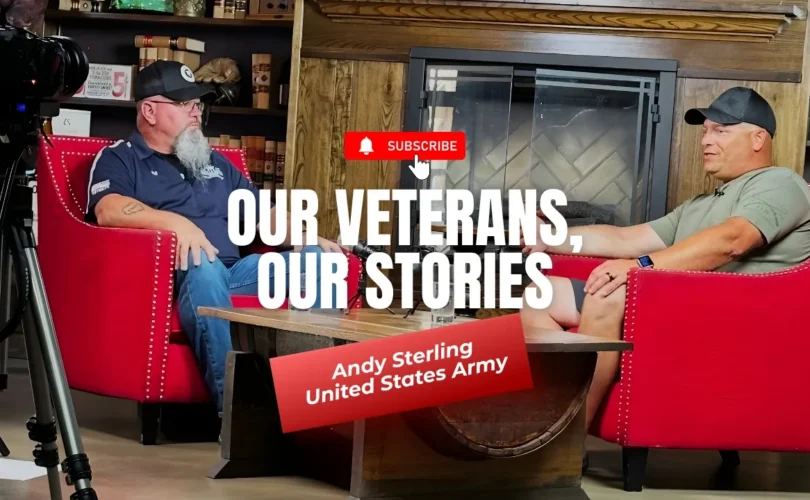
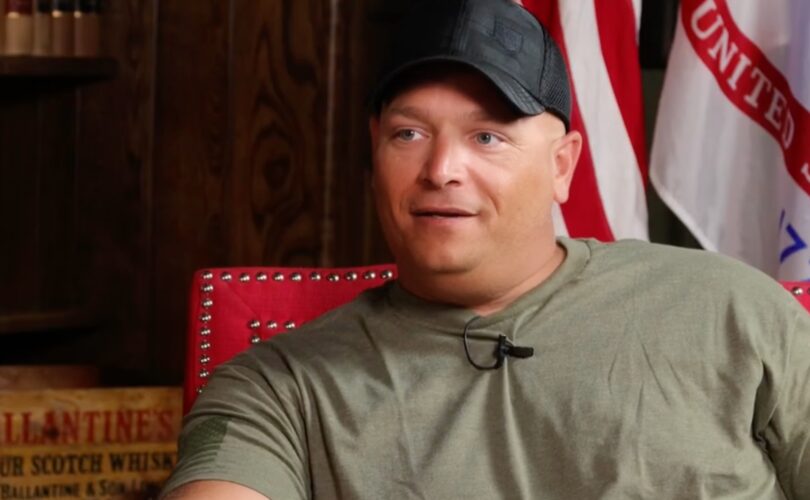
Andy Sterling United States Army Veteran
Four deployments. Multiple career paths. A lifetime of service. In this episode of Our Veterans, Our Stories, we sit down with Andy Sterling, a United States Army veteran who served more than 20 years in the Army Reserves, completing four combat deployments and transitioning from combat engineer to intelligence analyst.
In this episode of Our Veterans, Our Stories, Andy shares how he joined the military just before 9/11 and how his career evolved through some of the most critical years of modern warfare.
Apple: https://podcasts.apple.com/us/podcast/our-veterans-our-stories/id1798555195



0:00:01
(Speaker 1)
Welcome to the Our Veterans, Our Stories podcast with the Hancock County Veterans Service Office. This is where we give our local veterans an opportunity to share their stories with our community and beyond. There is a real brotherhood among all vets, and it would be great to help others to know their stories about serving our country. And it gives us an opportunity to introduce the community to our team at the Hancock County Veterans Service Office so people can learn a little bit more about what we do and how we can help. Welcome to the podcast today. We’re fortunate enough to have Andy Sterling, a fine veteran, and he’s also one of our veteran service commissioners.
0:00:37
(Speaker 1)
So please join me and learn a little bit more about Andy and and his service. So, Andy, with that, welcome to the podcast. Thank you. It’s great to have you. I’m interested in learning about your story. I know you’re an exciting person and I I’m just real excited to hear about you.
0:00:55
(Speaker 1)
And so let’s start with tell me a little bit about, you know, where you grew up, where you’re from, that part of it. Originally from North Baltimore. Graduated 2000 from there and pretty much stayed there till I got married and now we live over in Van Buren. So, okay. Yeah. All right.
0:01:15
(Speaker 1)
So at some point in there you obviously chose the military. What was your thinking behind that? What made you kind of want to join the military? Boredom. You were just bored? I was graduating basic training, was coming home on 9 -11.
0:01:32
(Speaker 1)
So I would have actually been the last group that signed up for college or anything else. I mean, After that, everybody’s signing up for war or whatever reason that they had. I was a crap student in high school, so there wasn’t a whole lot of wanting to go to college or anything. else and didn’t really have a set plan. So, you know, good upbringing with parents and that, but you just needed something else. And so I met a recruiter of mine out of Bowling Green, just discussed options with the military and signed up with Army Reserves back in May of 2001.
0:02:25
(Speaker 1)
I gotcha. What MOS did you choose? So originally I went in as what was it, 62 Hotel at the time that became 21 Victor, the concrete and asphalt equipment operator. I see. Then through the career transitioned into a 12 Bravo combat engineer and finished out as an intel analyst. So you initially went into the engineers.
0:02:53
(Speaker 1)
I did. There’s a lot of pride in that engineer corps, I know. Yeah. We were same battalion. So you would have been. Yeah, actually, Alpha Company.
0:03:01
(Speaker 1)
That’s where I started. I started in Alpha Company in line with 983rd. Yeah. And I was at the HSC up in Monclova. Yeah. So a small world, you know.
0:03:10
(Speaker 1)
Yeah. So tell me about the service you’re in. Where’d you do basic at? Fort Jackson. Fort Jackson. Yeah.
0:03:18
(Speaker 1)
Fort Jackson. Then went to Leonardwood for A . I . T. Is that an exciting experience? It was.
0:03:25
(Speaker 1)
It was eye opening. So, I mean, you come from a small town and I had a graduating class of 38 people, so there’s not a whole lot of different background experiences to get to know. And then it’s one of the best things about the military, right, is you see everybody from all different backgrounds and you have the same purpose in life once you get there. So you really learn how to make friends at a personal level as opposed to where they came from or anywhere else. Yeah, such a valuable experience for veterans to have that. Oh, absolutely.
0:04:00
(Speaker 1)
Yeah. You had mentioned a combat engineer. So you were deployed multiple times. You want to walk me through those? Tell me a little bit about those. Yeah, so I had four combat deployments.
0:04:14
(Speaker 1)
I had December of 03, February of 2005 for Operation Iraqi Freedom. So we had been second. It had been the year before 983rd went. The guy was leaving country as everybody else was going in. You were cross -leveled probably? I was to a unit out of Orangeburg, New York.
0:04:40
(Speaker 1)
So to take a guy from Ohio and throw him in with a unit out of guys from the Bronx and everything else, that’s a culture shock in itself. But it was a good experience there. And then came home. I was home for a little over a year or so. And then October of 2006 to October of 2007 was in Ramadi. I did route clearance out of there.
0:05:09
(Speaker 1)
Talk about not an easy job. No. Route clearance out of Ramadi? Yeah. Why? And that would have been during the surge.
0:05:16
(Speaker 1)
Yeah. So everything was new. IEDs were a new concept. When you and I were training, everything was Cold War tactics. So IEDs and urban warfare was not. something that was in our mission set when we were going through.
0:05:35
(Speaker 1)
The Army was still large, we didn’t go to, it’s a small unit tactic, so they built these route clearance units. It’s when the MRAPs were starting to come out and we would just go out, my particular platoon would do 14 -day mission sets. We’d clear the routes, the main supply routes from Ramadi to al -Qaim, so the Syrian border, and turn around and come back. But it was clearing routes for everybody that was hauling equipment or moving personnel. And so that was an interesting time to be deployed.
0:06:15
(Speaker 1)
I’m certain that you’ve, you know, Probably saw some things during that time, I’m sure. Oh, absolutely. Yeah. And then so that that deployment, I got injured in February of 07. My truck got hit by an IED and fractured my hip. And just I came home still having issues with it.
0:06:43
(Speaker 1)
I said, you can’t be a combat engineer anymore. So I transitioned into Intel and worked in like S2 doing strategic planning, things like that. moving up through the ranks and I went a long spell, was able to get married, have kids, and then it wasn’t until 2016, I got cross -leveled to a unit out of Washington State to go do targeting for JSOC, for Special Operations. We would go out and find the targets for them, for writing in a C -12 and going through there. Came home after that and then pretty well thought I was done, and then in 2016, So I got home in February of 2017, and then by February of 2018, the night before. was getting deployed again to go to Taji, Iraq.
0:07:53
(Speaker 1)
And so we went out there and did one last year. I came home and then I retired in September of 22. So going from route clearance to intel and as you said painting targets or targeting. Tell us a little bit more about that. So that was probably the most interesting. The route clearance had to be most rewarding just because IEDs were such a detrimental add -on to the war zone.
0:08:36
(Speaker 1)
They always said Iraq was a road war. Oh man, yeah. It was definitely interesting. Then you go into transitioning to Intel, right? So you get a call and it’s, hey, we’re going to send you out through targeting. And by the way, you need to go through, you got to get a flight physical so that you can be in aviation status.
0:09:06
(Speaker 1)
So not really knowing what to expect from there, because I mean, you know, right in the military, they’ll tell you what this job is and trying to explain what it is, is not always the easiest part. So with targeting, we would be put up in a plane at 20, 30 ,000 feet, give me a list of targets for the day, go out and track them down, you might watch them for a day, a week, a month, until a decision is made on… they’re going to do to action the target, whether they’re going to go pick them up or just execute them. And my job was just kind of bird dog them and say, here they are, you figure out what to do with them. Yes. So you’re talking not physical targets, you’re talking people.
0:09:56
(Speaker 1)
Yeah. So this was like something that was really instrumental, I guess, on the, let’s say, the hunt for Bin Laden and things like that. That’s serious stuff. Yeah, and it’s pretty amazing how those things are done, whether it be through technology or video or anything else, and the amount that you can learn about your enemy without being physically next to them. You can build their whole day, just kind of figure out where a window of opportunity is going to be. In Intel, they call it a soak of information.
0:10:39
(Speaker 1)
So you just gather a bunch of information and you give that to somebody else that needs it. There’s a lot of things. from all levels of the military that you gather things and you don’t really know what it’s being used for, but you just trust that it’s going to make the right decisions. So your experience is similar to mine. Not being active duty and being a reservist, there’s a lot that goes on because you try to juggle two lifestyles, right? You’re a father, and you’ve got a civilian job.
0:11:13
(Speaker 1)
The next thing you know, you’re on orders doing Army stuff for a year, and you come back, and you get thrown right back into that. just over and over and over, and that takes a toll on family life. Can you tell me a little bit about your experiences in that? Well, you’re 100 % correct. Family support is a fuel that drives the military. So having a good family nucleus, and it doesn’t even have to be a blood family, right?
0:11:40
(Speaker 1)
So as long as you got those people around you, it goes everywhere in life, but especially for the military. And then my wife, I was in the army for a year when I met her. So out of my 21 years, she was with me for 20 of it. And it’s tough, especially like you said, on the reserve side, because you’re trying to build your civilian career. The reserves have the same requirements as active duty, so building your military career can be tough, and you have to make those choices between missing my oldest. I missed his first day of kindergarten because I was in Afghanistan, and you know, there’s things that you remember that you’ve missed, but the big thing is just having that strong support system.
0:12:27
(Speaker 1)
I mean, my wife, I always joked with her that it was like being a second spouse because she knew I was married to the military first, and it’s a tough thing, you know, especially Everything’s pushed of, if not you, who’s going to do it? So we have a tendency to pick up where other people leave things fall. And you have to make the choice between your military family or your at -home family. And if you don’t have that support behind you, it’s often a tough road for people. Yeah. Then you always get that.
0:13:01
(Speaker 1)
Oh, you were just a reservist. You probably didn’t do much or whatever. And I don’t know if you want to speak a little bit about that, about how the missions were over there. Yeah, so I make a big argument, and active duty people probably get pissed off at me, but I make the argument that the reservists are best equipped to fight in different wars. You come and see something because it’s a hierarchy.
0:13:30
(Speaker 1)
It’s not as flat in the military, so there’s a hierarchy where orders come down, decisions are made. But you have reservists that signed up, and you can be an equipment operator, you can be a combat engineer, intel analyst. But I’m working finance in the tax department at Marathon, and then next thing I know, I’m deployed. I have different skill sets to solve problems. And a lot of people don’t realize that reservists are better equipped for fighting these wars because they bring different skill sets that they built on the civilian side. Or you take an equipment operator that on active duty, they might not get as much time to push dirt, but they’re in the operating engineers back here in Ohio, and they’re pushing dirt and building roads all day.
0:14:19
(Speaker 1)
So a lot of things that, you know, we get officers that say, this is how the book says to do it. And you have a guy that’s been doing it for 15 years on civilian side can solve problems better. So it’s, yeah, reservists always get a lot of flack. There’s not as much time to keep your physical fitness or might not be as groomed as far as military customs and courtesies, but when it comes to getting the job done, they can always get it. Absolutely. And there’s multiple deployments you had.
0:14:56
(Speaker 1)
Did that Did that begin to wear on you or was you just like, all right, let’s do this. Let’s do this. Let’s do this. So, you know, that’s a lot of deployments. I got a lot of understanding. You know, I was 21 on my first deployment and I made E -5 during that, right?
0:15:13
(Speaker 1)
And so everybody knows when you make E -5 and you start getting in a leadership position, you get cocky because it’s, hey, I’m in charge of something. And deployments are not easy. great place to learn, because you learn how to read people or put people in the right positions. So it’s kind of how you take that experience. And you’ll see the older NCOs, when deployments first started happening, and they’re struggling with stuff back home. And you don’t really, when you’re young, you don’t understand all that until you have a family.
0:15:48
(Speaker 1)
And you got to say bye to your kids. It was It sounds mean to say, but I’ve told my wife, like, I could leave you a hundred times and not think twice about it. But saying goodbye to my kids were awful, especially the ages they were at. They don’t understand how long you’re going to be gone. And then you start going through the, you know, wondering, like, is somebody going to be else be raising my kids or or things like that? So depending on the baggage that you have at home, it can really change things.
0:16:22
(Speaker 1)
So my first two deployments, I wasn’t married and didn’t have kids yet. And it’s easy. And then by the time you roll to your second one, or your third and fourth deployment, and you got time in, you have a lot more things to think about. So it gets to be tough. But like I said, it all goes back to the support that you have and just knowing. And we were lucky enough that the kids were in a good school system, that I had teachers that would scan my kids’ homework and send it to me through email so I’d have something to check.
0:16:55
(Speaker 1)
That’s pretty neat. And things like that. That’s where the community starts to come in and you really appreciate the people that understand what you’re in. Or even if they don’t understand, they try to make an effort to kind of make it more comfortable back home. Your kids, every when you get home, I know my kids did, did they ever just tear through your gear and be like, I want this, I want that. And the next thing you know, you see them out in the open.
0:17:20
(Speaker 1)
with a BDU top on or something, you know, just they ever peel through your gear? Oh, yeah. Yeah, they did that. You know, they go through their stages, too. I remember after my deployment to Afghanistan, you know, my oldest would have been kindergarten. So my youngest wasn’t in school yet.
0:17:41
(Speaker 1)
And you finally get home and excuse me, you finally get home and you know, where you get three months before you gotta go back to drill, and that first time you put your uniform on, and they’re mad because they think you’re leaving them for a long time again, you’re trying to tell them, like, hey, I’m gonna be home tonight, like, calm down, but yeah, they transition, they kinda start going through your stuff, or they talk about joining the military, of course, their mom gets mad, because it’s easier for her to say goodbye to her husband than it is her kid, so they got time for that, but then, Yeah, and when I creeped up on retirement because, well, you know how it is, you collect all that crap in your basement of four different camouflage patterns and you start sorting through and you’re like, I don’t even know what I’m signed for to turn back in. I don’t know what I have to turn back in. So you’re trying to pack it all up and then they’re trying to scavenge everything off you. Listen, I don’t even want this stuff anymore and I sure as heck don’t want you keeping it around the house. Yeah. Yeah.
0:18:50
(Speaker 1)
Especially having two boys. Yeah. So at the end of all those deployments and all that, you decided on retirement. You retired out. Where were you at in your civilian careers and all that stuff at that point? How was that transition of retirement and knowing that you weren’t going to put that uniform on again?
0:19:11
(Speaker 1)
So retirement was a tough transition for me. more because it was a forceful retirement. So you know, like I said earlier, that multiple deployments can wear on you and something that’s not well spoke about in the military or the veteran community is on mental health. And the military tries to do its best in saying, hey, if anything pops up, you know, go get it checked out. It’s no different than having your heart checked. But, uh, so I went and I did my yearly PHA.
0:19:53
(Speaker 1)
I’d been going to see mental health for like two years for some anxiety and, uh, everything was fine. And then PHA, they ask you if you’ve seen any providers for mental health. And I said that I had, and they decided that it was time to transition me. So it was, it was more of a, it was more tough because I didn’t pick my exit. So you had that little bit of time of, you know, didn’t know if you were ready to take the uniform off. There was still a sense of purpose.
0:20:29
(Speaker 1)
And then you start coping with it. But it was things of, at the time, working corporate in a tax department and decided I need to do, you have to fill that void. And I know, you know, as an NCO, that mentoring really gives you a sense of purpose. And it’s kind of, how do I fill that void of mentoring? So I decided to go get in back into the mortgage business to where I could at least my master’s in finance is something I understand and it’s something that I believe the two biggest things that people don’t understand well is because we don’t talk about it as mental health and finance.
0:21:18
(Speaker 1)
It’s two things that I become passionate about so I transitioned over into the mortgage world too. Did you have all of your education or were you able to use some of your post 9 -11 GI Bill? No, I was like Jerry Maguire, show me the money. I went through and if they had tuition assistance, GI bill, I used every dime of it. Absolutely. Like I said, I was a crap student and I think my parents were more surprised that I graduated high school than I was.
0:21:54
(Speaker 1)
But something changes when you go and you go through basic and that and you’re like, If I can get through that, and the military’s good at throwing more on you than what you can handle, and teach you to prioritize, and just kind of show you that the more you learn, the more equipped you are to help other people. And it’s not necessarily that it’s making you the best, but you become more equipped. That old adage of the pen’s mightier than the sword. Absolutely. You learn it in the end, don’t you? So I was always a big advocate of using all your college money.
0:22:36
(Speaker 1)
I told all my young soldiers that if you didn’t utilize GI Bill or any of that, you were leaving money on the table. So yeah, I used every bit of it and finished. I did my bachelor’s at Finley and I finished my master’s at Tiffin. That’s great. It’s good to see you come back and finish all that up. So now you’re in the mortgage business.
0:23:03
(Speaker 1)
Oh, so right now I work with Guaranteed Rate and it’s a non -bank lender that does mortgages. So I focus a lot on the veteran community or just educating homebuyers. There’s a lot of things that it’s rough. Everybody talks about it, right? Whether it be interest rates or home prices, things like that.
0:23:26
(Speaker 1)
And there’s a lot behind the scenes of how finance figures into it. So whether it be your personal finances or the market how it is and how do you match what the current market is to what your current dream is and there’s a lot of things like I circle back to to mental health and I think mental health and finance is connected because finance can be it can be tricky. I could show you four different ways that you can finance a house and three of it you would think I’m BSing you and using some kind of magic math to get you to buy it. And it’s only because it’s something that it’s tough to understand, right? And then you don’t talk about it as a kid. And everybody said, we don’t talk about finances.
0:24:16
(Speaker 1)
And we don’t talk about mental health. And those two things that aren’t spoke about are the toughest things when you’re an adult to handle. So you’re also a commissioner on our board. And I know when I found out you were going to become a commissioner, I was excited because I just knew you were the one for the job, right? How’s that been for you so far? It’s been awesome.
0:24:41
(Speaker 1)
So I got appointed in January. I represent the at -large seat that has Military Order of the Purple Heart and the Korean War Vets. So giving those organizations a voice on the board has been awesome. Nicole and everybody in the organization. It’s been good to support such a great organization and what you guys put forth to make great events and great assets for the community and the entire county of veterans. The big thing is I want to get on and find ways to support getting the information out there because it’s only support if people know about it and they utilize it.
0:25:25
(Speaker 1)
Absolutely. You can go through plenty of other counties that don’t put in near the effort that you guys do at the office. So it was a great thing. It’s kind of it was a weird transition that I had gotten involved with. Allen Cramp, they put on the silent watch every year. Oh, absolutely.
0:25:45
(Speaker 1)
Yeah. And they came to me and asked if I would help facilitate of just they wanted more advice on proper military customs for the event. And then I met Nicole and talked to her. and got involved with the action group we put together for veteran suicide prevention. And then, you know, you start going down those rabbit holes of where else can I fill in to help? And so it’s been a satisfying transition.
0:26:21
(Speaker 1)
And it’s one of those things that people will bring up a lot about the older veterans running things. And it’s more of older veterans get involved because they have time or the younger veterans don’t know how to get involved. So it’s been good coming in to kind of help bridge that age gap and kind of start leaning forward on what do we need to do for the next group that’s coming through because for you and I, somebody was there for us to make sure that all of us through. So now we need to start building something to make sure the next generation can backfill and provide the same level of service that you guys are giving now. Absolutely.
0:27:07
(Speaker 1)
And speaking of all the services, I know Nicole always said she has high regard for the commissioners because it’s the commissioners that give the support to Nicole’s visions that make this whole thing work. Without that support from the commissioners, who knows where our office would be. Seems to me that you used some services from our office. How was that process for you? Had you tried other places first and then, you know, then went to us? I mean, tell me a little bit about our office’s help with you.
0:27:39
(Speaker 1)
So I’m a little different, but I will read and research, read regs. So I did the route first of trying to do it myself as far as making sure I was getting all the benefits afforded to me, whether it be through disability or anything the county offers as far as benefit or support and I was a struggle with one of my claims and so I’d gone in and got hooked up with Kyle to kind of go through and he did a great job of making sure that I had all my paperwork correct and filed for an appeal on that and successfully won that appeal and then on the other side having Frank who I mean It was sad that he retired, but his time there was great. I always had somebody to call, though, so I had a friend that had passed away a year ago in December, and his spouse not knowing, like, hey, what about the marker on the back of his car? Or he had disabilities, so how does that work on his minor child that was left behind? And things like that. And all I had to do was give one call to Frank.
0:29:04
(Speaker 1)
And he had her come in, he had everything set up, knew exactly what to do, everything. And for people that don’t know, for spouses or anybody, even You could have been around the military your entire life, but there’s just some things that you either don’t understand or you don’t understand the process because your spouse handled it. So, you know, you just dealt with the loss of a loved one and trying to run around and figure all that out to have an asset here in the county. There’s a one -stop shop that she shows up there and Frank says, here’s where it’s getting delivered. You know, here’s where the plaque’s going to be on the back of it. These are other benefits that you need to look at.
0:29:51
(Speaker 1)
Here’s how everything works, and just taking that stress off of her was amazing to see. So it wasn’t only assets that I used, but being able to refer friends there and know that they were going to be taken care of. That’s fantastic. And we always say that at our events. We have some non -veterans come to our events, which is wonderful. And they ask us about some programs and things like that.
0:30:17
(Speaker 1)
And they’ll take literature because they know other veterans that they can get that information too. which is, that’s how it’s supposed to be, you know, so. So what advice would you have to any young people that may be thinking about the military? I give the same advice to young people that I give to young soldiers as they come in, is nobody will ever care about your career as much as you do. So they need to take advantage of every opportunity that they get and learn everything they can. Some of my best life lessons on dealing with people or managing people or things like that, it came from my time in the military.
0:31:01
(Speaker 1)
But you have to go in with an open mind. One of the beauties of it is if you don’t go in with an open mind, it’ll open your mind for you. Because if you choose not to assimilate, you’re just going to be left on the side. And those are the people that don’t go through with the career or even when they do, you run into people that we’ve all done it before retirement, right? You have the ebbs and flows of life. We experience it quicker in the military because our career is so small.
0:31:34
(Speaker 1)
You think of 20 years being a long time, but I don’t know, as you get older, people aren’t as old as what you used to think they were, but they, you know, you go through and, and it just depends if you hit, if you’re at that low, when you do your re -enlistment, and you don’t want anything to do with it. But a big thing I always told the younger ones was I’d never met anybody that regretted retiring. You’ll always run into veterans that regretted that they didn’t stick it out. But I’ve never once ran into anybody that was mad that they stayed till retirement. I’ve never heard that. That’s that’s a good way to put that.
0:32:10
(Speaker 1)
You’re right on. So what do you think some of the issues are with the veterans in the county, with the veterans organizations or anything like that? You thought about that? Yeah. So the biggest issue I think that we have is involvement, right? So, I take military order of the Purple Heart.
0:32:32
(Speaker 1)
I can be involved with that because I have a flexible schedule that I can go to meetings that are the second Monday of the month at 10 a . m. But there’s a lot of, I mean, people that are more mature, my age, late 30s, early 40s, that their involvement can increase the experience for other veterans, you know, tenfold. And there needs to be a passing of the torch where we give grace to the generation that built what we have now. So you have a lot of Vietnam, even Korean veterans that have run a lot of these clubs and they’ve done a great job to where they’re at. But the dynamics of my family is not the same as the dynamics of their family.
0:33:28
(Speaker 1)
So the service that’s needed is not captured as well. But you don’t cast an old guard aside because they’ve still done great things to get us where we’re at now. And there needs to be more of a mentoring or like when I say passing of the torch or the guide on. You know, when we passed the guide on for change of responsibility or change of command, it wasn’t, we’re not saying that the old commander was worthless. We’re saying, hey, thanks for protecting this. Now it’s my turn to take it and go from there.
0:34:02
(Speaker 1)
So getting the younger veterans involved with the service clubs to increase the level of the services that those clubs are providing and also generate a pipeline of people that can serve on the veterans board to, like I said, leaning forward on just issues that are going to come up with future veterans because we do a great job now of when they come back, when we can capture them, but how do we reach out and let them know? there and let them know that they have a voice. If you’re not getting the level of service that you expected or I didn’t want to come in and talk to Ed and get a bunch of pamphlets, you need to speak up and say, what did you expect when you came in? Because, you know, it’s like sitting through a restaurant that you didn’t enjoy the meal. Instead of not leaving a tip, maybe you have a talk with the restaurant to say, here was the experience I expected. And you can make a difference that way.
0:35:06
(Speaker 1)
But if nobody speaks up, nothing changes. That’s really good advice right there. Well, I suppose is there anything that we haven’t talked about that haven’t touched on that you missed? Not that I know of. Thank you for sharing your story with all of us today. You’re an amazing veteran, and I thank you for your service.
0:35:25
(Speaker 1)
Thank you for what you continue to do today. And it’s been nice talking with you. Thank you.