
Our Veterans, Our Stories Podcast
Marine Veteran Roger Neff: Lifetime of Service, Leadership & Patriotism
In our debut episode of Our Veterans, Our Stories, we sit down with Roger Neff, a proud United States Marine Corps Veteran and 2021 Ohio Veterans Hall of Fame Inductee. Roger’s impact on Northwest Ohio is nothing short of extraordinary. From forming the Findlay-Hancock County Military Affairs Committee to coordinating an annual Armed Forces Day program for 27 years, his leadership has left an indelible mark on the veteran community.



0:00:00
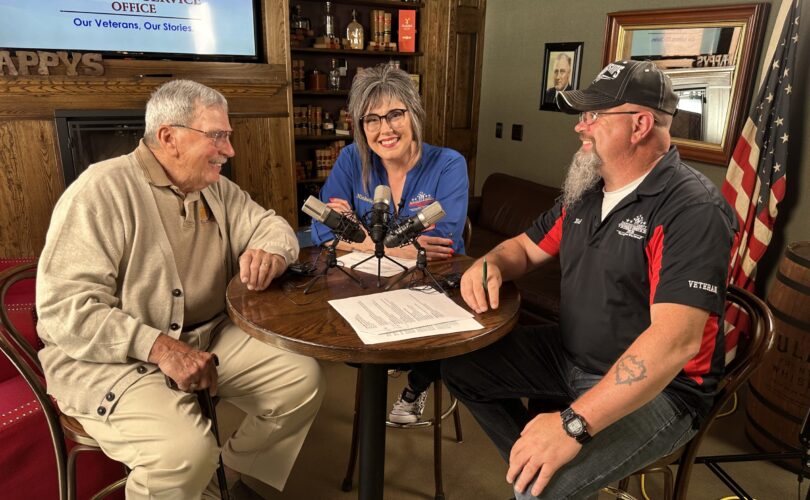
Welcome to the Our Veterans, Our Stories podcast with the Hancock County Veterans Service Office. This is where we give our local veterans an opportunity to share their stories with our community and beyond. There is a real brotherhood among all vets and it will be great to help others to know their stories about serving our country. And it gives us an opportunity to introduce the community to our team at the Hancock County Veterans Service Office so people can learn a little bit more about what we do and how we can help.
0:00:26
So today we’re talking to Roger Neff, a good friend of mine, who is a three-year Marine Corps veteran. But as we all know, once a Marine, always a Marine. Absolutely. So we’re going to hear a little bit about Roger’s story, his time in service, his interaction in our community, and one of my favorite things. Roger is the first person from Hancock County to be inducted into the Ohio Veterans Hall of Fame. So we’re going to have him tell us a little bit about that as well. So Roger, why don’t you start by telling us what led you to join the Marine Corps?
0:01:02
Well, that goes back. Okay, first of all, I was born October 10, 1939, and the World War II started in 1941, and in 1943 and 1944, my parents and I lived on the old National Highway, Route 40, at the intersection of Ohio 54. One stoplight. There were convoys going east, there were convoys going west. what really got me involved with, my mom would take me down and we’d watch these crossing guards jump out and stand at parade rest while the whole convoy went through. Well, there were several Marine Corps convoys that went through,
0:01:52
and each time the crossing guards always did the best job. And I’d ask my mom, who is that? And she’d say, that’s Marines, son. And I told her, I said, someday I’m going to be a Marine. And so in 1957, I graduated from high school. And there were five of us from the school that joined the Marine Corps. So Roger, tell us about your time in the 105 howitzer battery. We were attached to the Fleet Marine Force Pacific. We were a combat ready unit, but most of the time it was a training unit. And basically the 105
0:02:42
is a small howitzer. And when I started out, I was pretty much a guy that handed the shells to the guy that was loading it. And then you had a guy that set up the sights, and you had a guy that gave the command to fire and so forth. And eventually, I worked myself up to where I was there in that unit until December of 59. Then I started collecting military vehicles and I ended up with 18. of the country and pick up jeeps or ambulances or M-37s.
0:03:37
Anyway, I ended up with 18 pieces and we started doing parades and static displays every summer and for about 15 or 20 years. I think I probably spent about 35 years with the vehicles. I have established a really nice museum that has almost 6,000 square foot of collection, a collection of items, military from World War I, World War II, Korea, Vietnam, and Afghanistan. I’ve got about 135 mannequins set up.
0:04:30
There’s a hospital. There’s a weapons room. And my wife and I, that’s pretty much about the only participation we have now with the different things. We’re both getting old.
0:04:48
Now, Rob, you’re on that, on your museum, that’s still open?
0:04:53
Yes. You still have that?
0:04:55
Oh, yeah. In fact, my wife and I, since it turns 50 degrees, any day it’s 50, we didn’t have it open because of the COVID stuff. But we have cleaned, some of the Marines have come out and we’ve done some painting, we’ve We’ve added several new mannequins, several new uniforms. And we have, one of the things I really enjoy about that is I have people coming out
0:05:24
and talking about their experience when they were in the service. And sometimes, just last week, I had a gentleman stop out. He wasn’t in the service, but he collected military stuff. And he brought me out some interesting stuff for the museum. But I got another guy that just got out of the Corps. He was a sniper in Afghanistan, and he’s bringing out his sniper stuff. growing and it gets more and but the people that come out that weren’t in the
0:06:03
service they’re the ones that get such a thrill of coming out and listening to these guys tell their stories. So it’s a big education piece. Oh yes. It lets people know that didn’t serve kind of what it was about. Yeah. Interacts. Yeah we have classes come in, mostly 7th and 8th grade classes. We have Girl Scouts, Boy Scouts, Cub Scouts. We had an automobile club stop. It was 25 Model A and Model T cars.
0:06:45
Now you want to see something that the people that was driving down the road, I mean they almost ran into them. They weren’t watching the road. They were looking at these cars. And I think about five of them pulled in. I have a driveway that goes around to the road. And about five of these Model A’s pulled in. It was a great snapshot. But when they got done, then they all went down the road one after another.
0:07:10
And you could just see this parade of old cars going down. It was fantastic. Now the whole thing was really a great experience. There was one little problem though. When these five cars that were parked in my driveway left, there was a nice oil spot where each one of them would park, but it washed out. Wasn’t any problem. But just you know going back and
0:07:33
talking, the museum has been, we’ve had it open now since 2000 and I’ll have it open June 1st. We’ll put an ad in the paper and let people know that it’s back.
0:07:47
One of the things I wanted to ask you is when you were explaining why you went in the military, you know, that experience when you were a young boy and seeing the soldiers or the Marines and their poise and how good they looked in their uniform and what a great job they did.
0:08:06
And they still do.
0:08:07
Exactly. One of the things that I think is really fascinating and interesting is how often that is the case that someone at a young age sees someone who’s in the military. And one of the things that I’ve noticed in conversations with veterans in our office is that not as many people are coming out to some of the parades, some of the events. And my concern is that maybe we’re losing touch
0:08:42
with some of those opportunities for kids to see veterans in that kind of light or people who are currently serving in the military. So share your thoughts about that.
0:08:53
That was one of the reasons that we started doing the parades. And one of the reasons why I kept buying vehicles and restoring them was because I wanted some different vehicles to put in the parade. And we wore uniforms most of the time when we were doing the parades, most of us could still get in some kind of a uniform. Maybe it wasn’t the same size as when we were in,
0:09:23
but the excitement that I saw and that we saw in the kids, Forest, Ohio, for example, I did a parade in Forest for probably 20 years. Every year that parade, the size of the people turned up. It’s a very patriotic community and there were always kids out there. And they’d want to come up and you’d slap their hands or give them a high-five. Our kids today are no different than the kids when I was young.
0:09:56
After I retired from banking, I had an opportunity, my neighbor was a county commissioner, was a bus driver, and he kept bugging me about driving bus, so one day I said, okay, so I’m going to try it for a year. Well, I went and drove bus for Finley City Schools, and it was a great, I had a great time with it. But I was a relief, so I drive one route one day, another route the next week. So I went back and they wanted me to stay. And I said, on one condition, and that is, you give me my route.
0:10:35
And they did. And I had kindergartners to senior high. And I did a lot of the sport trips. But I’ll tell you what, I never had more fun with kids than I did as a bus driver. I never had any problems. I wouldn’t allow any problems. And when we first started out, I said, look you guys, I was in the Marine Corps. No discipline. I expect discipline. And I expect you to be good kids and have discipline.
0:11:06
And they did. I never had a problem. Well, I had a couple ornery ones, but I had a couple that were really great kids. I did the girls sporting events as well as the boys. But the girls were always fun. Girls after the boys, if they lose an event, man, they’re mopey all the way back to the school.
0:11:34
Girls, if they lose, they get on the bus and they’re fluffing up their hair, they’re putting on their lipstick and they’re talking about the date that they’re going to have when they get back. They don’t, you know, it’s over with, it’s done. But kids, people complain about kids. Ninety-five percent of the kids that go to Findlay High School and the county schools are great kids.
0:12:01
So you mentioned those couple ornery ones, are those the
0:12:05
future Marines? That would be my guess. And that’s why you knew how to handle them.
0:12:10
Yeah, and no, well one of them, I see his mother once in a while and he was a senior high kid. He was just rotten ornery. He wasn’t a bad kid, just ornery. And so his mom, I said, his mom said, well, how’s my kid? I said, well, I had to kick him off the bus today. She said, you did? I said, no, I didn’t kick him off the bus. She believed you then, didn’t she? Yeah, she was ready to go kill him. But no, they were all great kids.
0:12:44
So let’s talk about your induction into the Ohio Veterans Hall of Fame. So you are humble, so probably not something you want to brag about, but you are the first veteran from Hancock County to be inducted into the Hall of Fame. Yeah. And when I look at the men and women who have been inducted into that Hall of Fame, they are, and for those who are watching who aren’t familiar with the Ohio Veterans Hall of Fame, it is not for the service or the acts or the work that the individual or the veteran did while they were in the military. It is for the work they did after
0:13:24
they were discharged from the military and how they brought their talents and their skills and their traits back to their community and had a positive impact. And so tell me how did it feel to be there and where was your ceremony at?
0:13:40
It was quite an honor and like you say, it had nothing to do with my service. It’s what I did at the 35 years I was with the Veterans Service Commission, the Hancock County Board, the Chamber of Commerce and other stuff that I was involved in that all added up to something. And it wasn’t something that I did by myself. Let’s make that clear. The reason I got inducted was not because of what I did. It was because I was in charge or started something, but all the people from Findlay and Hancock County that were on the
0:14:29
committees, they’re the ones that really made it happen. It wasn’t necessarily, it was a we thing, not an I thing.
0:14:40
But there always has to be that person who’s willing to say yes. When Ali Luff comes and is, will you come and do this? Will you help start this? And you’re right. It takes a community. It takes a village.
0:14:54
And we are very fortunate in this community to have a lot of people who will say yes when you ask them to join a team to make something happen. We see you come in the office from time to time,
0:15:06
and the whole office lights up. We love having Roger in our office. What are some of the benefits that you still get from the office. How has the office helped you?
0:15:19
For instance, transportation. We had one old vehicle to transport veterans. Now then, what do we have? We got what, seven vehicles out there now? Seven, yeah. We got vehicles going to Ann Arbor, we got them going to Toledo, we got them going to Dayton, we may have them going to Columbus or Cincinnati. I don’t think those are very often, but we also have opportunities to show some of the 30%, 40% what’s that called?
0:16:05
For compensation?
0:16:07
The compensation, yeah. That they get now, where before they were lucky if they got anything and if it was, it was 10% disability.
0:16:18
Yeah, and that’s a sign of the good county veteran service officers that are out there.
0:16:22
They’re very trained, highly capable. Yeah.
0:16:26
Yeah, and you help build that.
0:16:28
Look how many veterans now are on full disability or 50% disability. I got a friend that was in the Corps, and he just got his disability increased to 50%. And it should be. You know, these guys, especially now with the way that we have the different things that they have to live with when they come home, Nicole has done and the staff has done an outstanding, when you call in, when you call into that office now, you’ll get a message
0:17:09
if you want to talk about this, you dial, hit this number. If you want to talk about this, you hit this number. If you want to talk about the director, well, she’s probably in Washington, D.C. doing something as president of a group for National. But it’s all there. Anything that a veteran has a question now, there’s an answer for them. The transportation’s there. So what has made the difference?
0:17:39
The difference has been we have a director that cares about our veterans, that has been able to put together the right people for the right job and doing it now, not later.
0:17:56
And having the Veterans Service Commissioners who would support the needs that were there.
0:18:02
I agree with that. I would not have been able to do it without the support of the Commission. I know your commissioners and in fact one of your commissioners, I believe, is going to be Veteran of the Year tomorrow. He was on your office staff, I believe. We have one of our commissioners and one of our employees. It’s just an example of the outstanding people that we have put together in that office.
0:18:36
So Roger, with your museum, what got you started? What interested you and why do you carry it on? I mean, what’s your purpose for the museum?
0:18:46
When I started, I had, I don’t know, maybe 10 or 12 vehicles at the time. Well, I had some of my stuff that I had collected for the last few years, and then I started getting calls from widows that said, I’ve got my husband’s stuff, and nobody wants it. Can you use it? Yeah, I’ll take it. Well, I can use it somehow.
0:19:16
Well, then I started the idea of maybe having a museum. As long as I’ve been doing this, I’ve seen a heck of a lot of stuff. But there’s something every day that I haven’t seen, and that’s what makes it so much fun. But seeing the kids come in and talking to these groups, I’ll probably just sit down in a chair and somebody will have to come get me and put me in a casket because that’s how much I enjoy doing it. So Roger, you mentioned
0:19:47
that you’re going to open back up June 1st. How can people get in touch with you to schedule an appointment to come out and see the museum or maybe to
0:19:56
donate items to the museum? I’m glad you brought that up because I only do it, the visits are only by appointment. Okay, because I do days that I’m cleaning, and there’s days I go to another auction where I might find something or a military show. But to get in touch and set up an appointment, they can call me at 419-306-9567 can send me an email at rnef1458tds.net and I’ll be glad to respond.
0:20:34
And I do get quite a few like that. I love showing it. I’m always happy to show it. And I think we’ve, I like to keep the groups down to about 30, but we have done as many as 70. But when I do that, I have two or three of the Marines come in that have been doing it and help me with it.
0:21:00
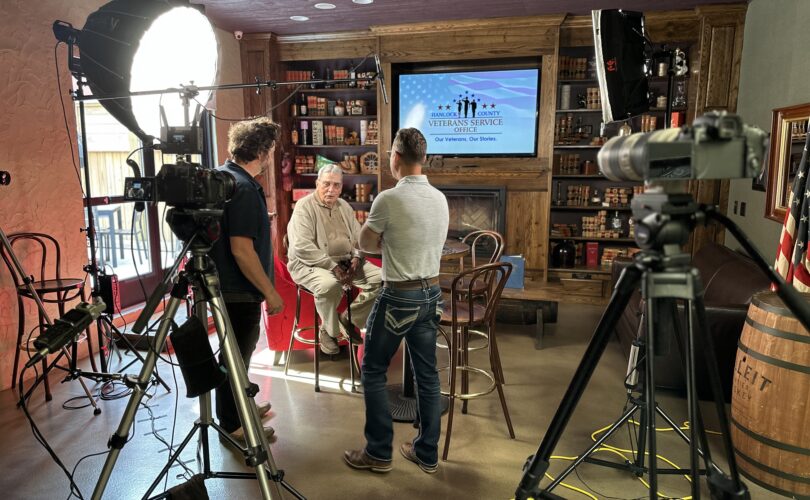
Thank you, Roger. Thank you so much for spending time with us today. We really appreciate it. And we would also like to thank the Bourbon Affair here in downtown Finley for providing great venue for our podcast, Hancock County Veterans Service Offices, our veterans, our stories. Place is beautiful, isn’t it? Yeah, it’s beautiful. Place is beautiful, isn’t it? Yeah, it’s beautiful.
0:21:20
Thank you. Thank you for everything you do for our veterans.